
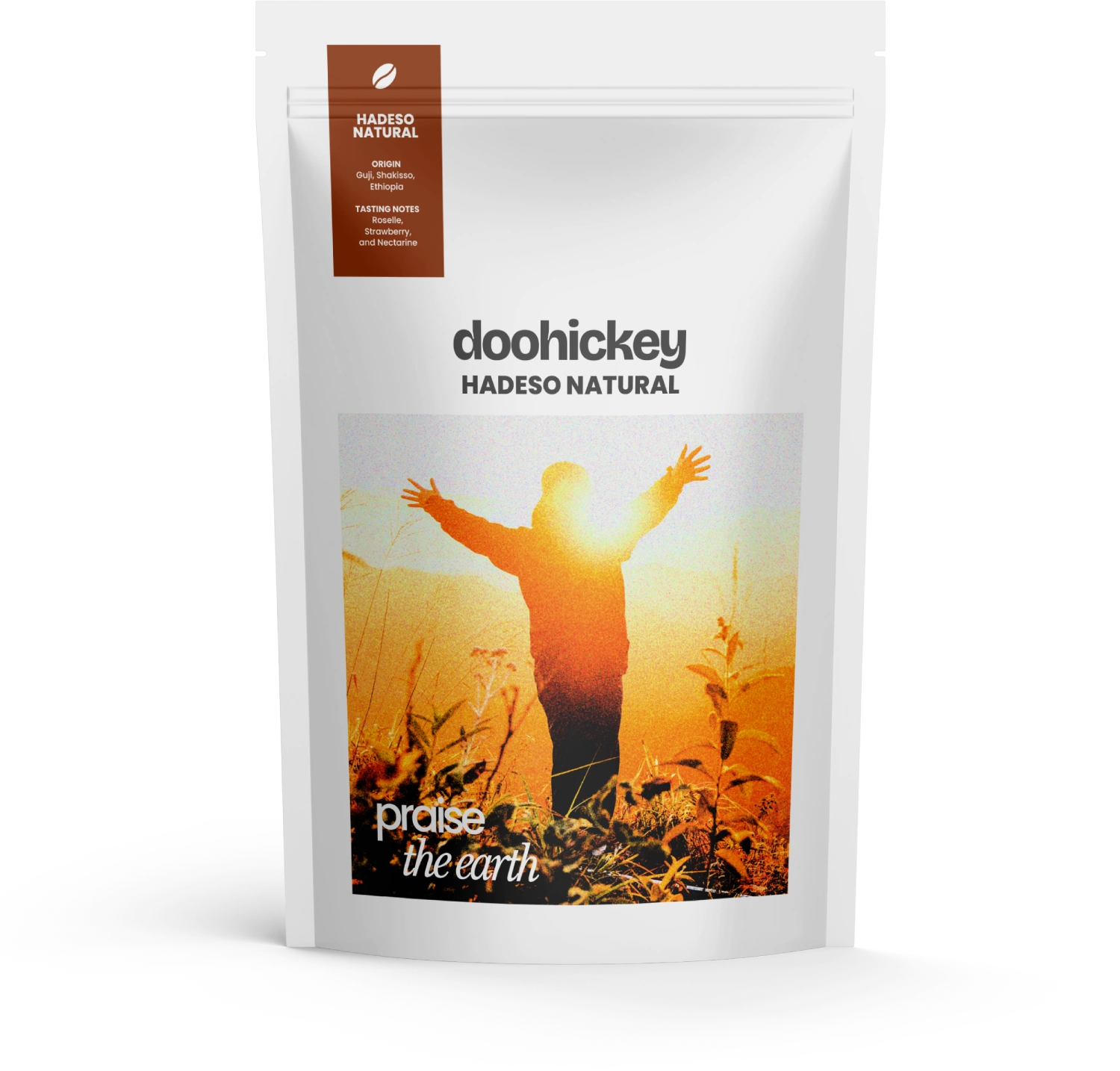




Description
The Hadesos
Owned and run by Testi Coffee (yes that is the real name), this washing station is located in Shakisso administrative district. With some 500 independent farms around the locale, coffees are grown at a high elevation of around 1900-2050m above sea level. Combined with the region’s cool temperature range, it makes an ideal environment for cherries to develop and ripen at a slower rate to produce a denser and overall, more complex tasting coffee.
Both lots are mainly comprised of landrace Kurume and Wolisho varietals and part of Testi’s quality improvement initiative, Premium Cherry Selection (PCS).
Hadeso Natural:
This coffee was processed using the natural method; a complex process requiring a high level of attention to detail in order to be done well. Ethiopian coffee has been processed this way by generations of farmers who have mastered the art of the natural method through centuries of tradition and experience.
Testi Coffee ensures that a great deal of care is taken in the processing and drying of their naturals, and they aim for all of their exportable coffee to be specialty quality grade. This coffee is classified as Grade 1, indicating that a lot of effort has been put into the selection, grading and drying to ensure the very highest quality coffee is produced.
Each day, carefully hand-picked coffee cherries are delivered to the wet mill and are meticulously hand-sorted prior to processing to remove unripe, overripe, or damaged fruit, in order to enhance the quality and sweetness of the cup.
The coffee is then graded by weight and spread evenly on raised beds to dry in the sun. Initially, it is laid very thinly and turned regularly to ensure consistent drying and prevent over-fermentation. This is done very carefully to avoid damage to the fruit.
After a few days, when the coffee has reached 25% humidity—this is called the “raisin stage”—the layers of coffee are gradually increased. Careful attention and control during this drying phase ensures the coffee is stable and that a clean and balanced cup profile is achieved. The coffee is turned constantly whilst drying to ensure that it dries evenly and consistently. At midday, the coffee is covered to protect it from full sun. It is also covered overnight to prevent damage from morning dew.
Once the coffee reaches the optimum moisture level (usually after 15–18 days), it is hulled and rested in bags in parchment until it is ready for export.